- Products
- Categories
- Histories


MASCOT® INDUSTRY
Developed for Industry, high comfort for the wearer
A recent survey by the European Textile Services Association reported that companies expect from their workwear quality, protection from risks, and comfort. In truly Tested to Work style, MASCOT launched a new Industry range of garments to provide get exactly that, and much more. Developed in response to customer demand, in 2010, MASCOT worked with industrial laundries and large end users to develop a modern new alternative for the industrial wearer.
The corporate identity of large industrial end users has also been a goal in the development process. The range is so comprehensive that the warehouse employee, the joiner and the driver can all have workwear to suit their individual needs, yet at the same time, have a uniform, matching appearance. In addition, the lighter weight fabrics make this an ideal range for working indoors.
Developed with the industrial laundry in mind
- No hook and loop tape is used
- All studs are hidden to avoid risk of scratching or catching
- Studs are open to aid easy replacement (canvas range)
- Robust triple stitched seams
- Durable with long life span - check out our test results!
TESTED TO WORK
MASCOT® tests fabrics within its industry range in accordance with ISO 15797 procedure 8B, to the requirements of the European Textile Services Association. ETSA grading is givin on a scale of 1 to 3, 3 being the highest grade.
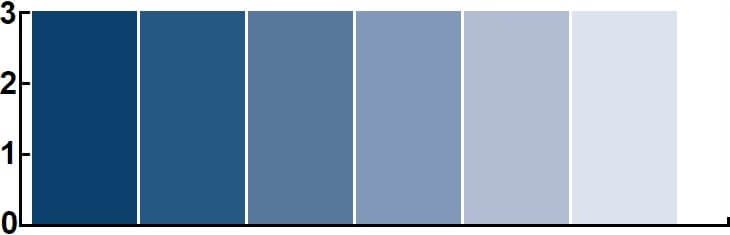
| Shrinkage ISO 5077 | Piling ISO 12945 | Tensile Strenght ISO 13934 | Crease Re-covery ISO 15487 | Abrasion Test ISO 12947 | Colour Change ISO 105 C06E2S, ISO NO1, ISO 105 E01, ISO 105 B02, ISO 105 C05 |
Result against ETSA requirements: Testing of MASCOT fabric Quality 154, 65% polyester/ 35% cotton, black, canvas weave, 260 gsm, Hohenstein Test Institute
Note: Procedure 8B - washing procedure 8 followed by drying procedure B, carried out 5 times. Crease recovery tested after 3 washes. Tensile strength is tested on unwashed fabric.
MASCOT uses two different types of weave - twill and canvas
in MASCOT® INDUSTRY, both of which have their advantages and design related characteristics. Which type you should choose depends on what you want and require from your workwear.
Choose MASCOT® INDUSTRY Canvas if you want:
✔ Modern and stylish design with an ergonomic fit
✔ High breathability
✔ Robust durable products
✔ A good selection of work and winter clothes in canvas
Choose MASCOT® INDUSTRY Twill if you want:
✔ A classic style
✔ Traditional industry clothing with an updated fit
Choose MASCOT® INDUSTRY cotton twill, if you want:
✔ A clean natural material that is soft and comfortable
✔ High breathability
✔ Clothing that can be washed at very high temperatures
✔ Clothes suitable for work near sparks
Helping the environment
A Life Cycle Assessment comparing domestic to industrial washing carried out by the reputed German Öko-Institut showed that:
- Industrial laundries use 64% less water than domestic washing
- Industrial laundries use 73% less energy than domestic washing
- By resorting to an industrial laundry process, 90% less chemicals are used than in typical home washing
- Industrial laundries emit 30% less CO2 and 36% less NOx than domestic washing
- Mascot Workwear International Ltd.
- First Floor, Clyde House
Blanchardstown Industrial Park
Snugborough Road
Dublin 15
D15 Y6NT
Reg.no. 621132 - Telephone: +353 (0) 12678900